

The Complete Guide to Eureka Springs
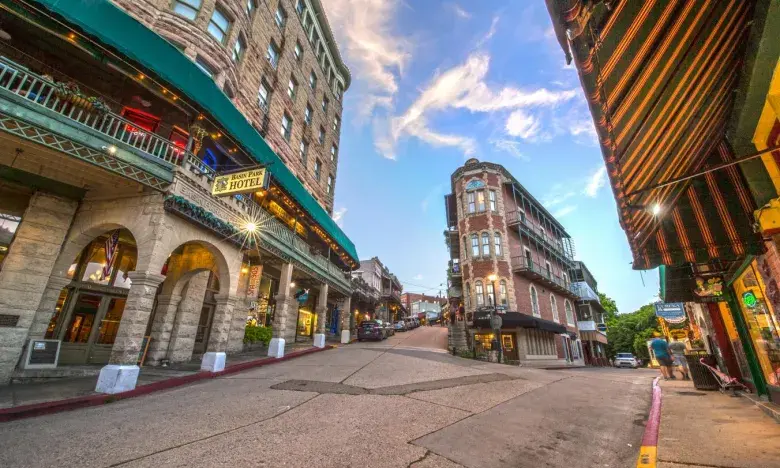
Nestled in the heart of the Ozark Mountains, Eureka Springs is a place where Victorian charm meets natural wonder. Known as the "Little Switzerland of America," this enchanting town offers winding streets, historic architecture, healing springs, and a thriving arts scene that has attracted visitors for over a century.
A Brief History
The story of Eureka Springs begins with water. For generations, Native American tribes visited the springs that bubble up throughout these hills, believing in their healing properties. When Dr. Alvah Jackson arrived in 1856 seeking relief from his ailments, he became one of the first Europeans to document what the indigenous peoples had long known.
The town's official founding came in 1879, when word spread of remarkable healings at Basin Spring. Within a year, the population exploded from a handful of settlers to over 10,000 hopeful visitors. Hotels, bathhouses, and Victorian homes rose on the steep hillsides, their builders adapting to the challenging terrain by constructing buildings that might have their entrance on the third floor.
This unique geography, and the town's resistance to modernization, has preserved what many places lost long ago. Eureka Springs is one of only two cities in the nation where the entire downtown is on the National Register of Historic Places. There are no traffic lights, no chain restaurants in the historic district, and the winding streets follow the natural contours of the land rather than any grid.
The Springs
At its peak, 63 springs flowed within the city limits. Each was believed to have different properties: one for skin ailments, another for digestive issues, yet another for nervous conditions. Visitors would "take the cure," following elaborate regimens of bathing and drinking from specific springs in specific sequences.
Today, many of the original springs still flow. Basin Spring, in the heart of downtown, remains accessible. Blue Spring Heritage Center, just outside town, produces an astounding 38 million gallons of crystal-clear water daily. The tradition of seeking the waters continues, even if our understanding of their benefits has evolved.
Downtown Exploration
The downtown district rewards aimless wandering. Streets curve and climb, revealing unexpected vistas, hidden stairways, and buildings that seem to defy gravity. The architecture is predominantly Victorian, painted in colors that would make a San Francisco street proud.
Spring Street forms the main commercial artery, lined with galleries, boutiques, and restaurants. But venture onto the side streets, Center Street, Main Street, the various stairways that connect the levels, and you'll find calmer discoveries. Artist studios occupy historic buildings. Bed and breakfasts fill ornate Victorian homes. Gardens spill over stone walls.
The Arts Scene
Eureka Springs has one of the highest concentrations of artists per capita in the country. The community includes painters, sculptors, potters, jewelers, glass artists, woodworkers, and creators working in every medium imaginable. Many maintain open studios where visitors can watch them work and purchase directly.
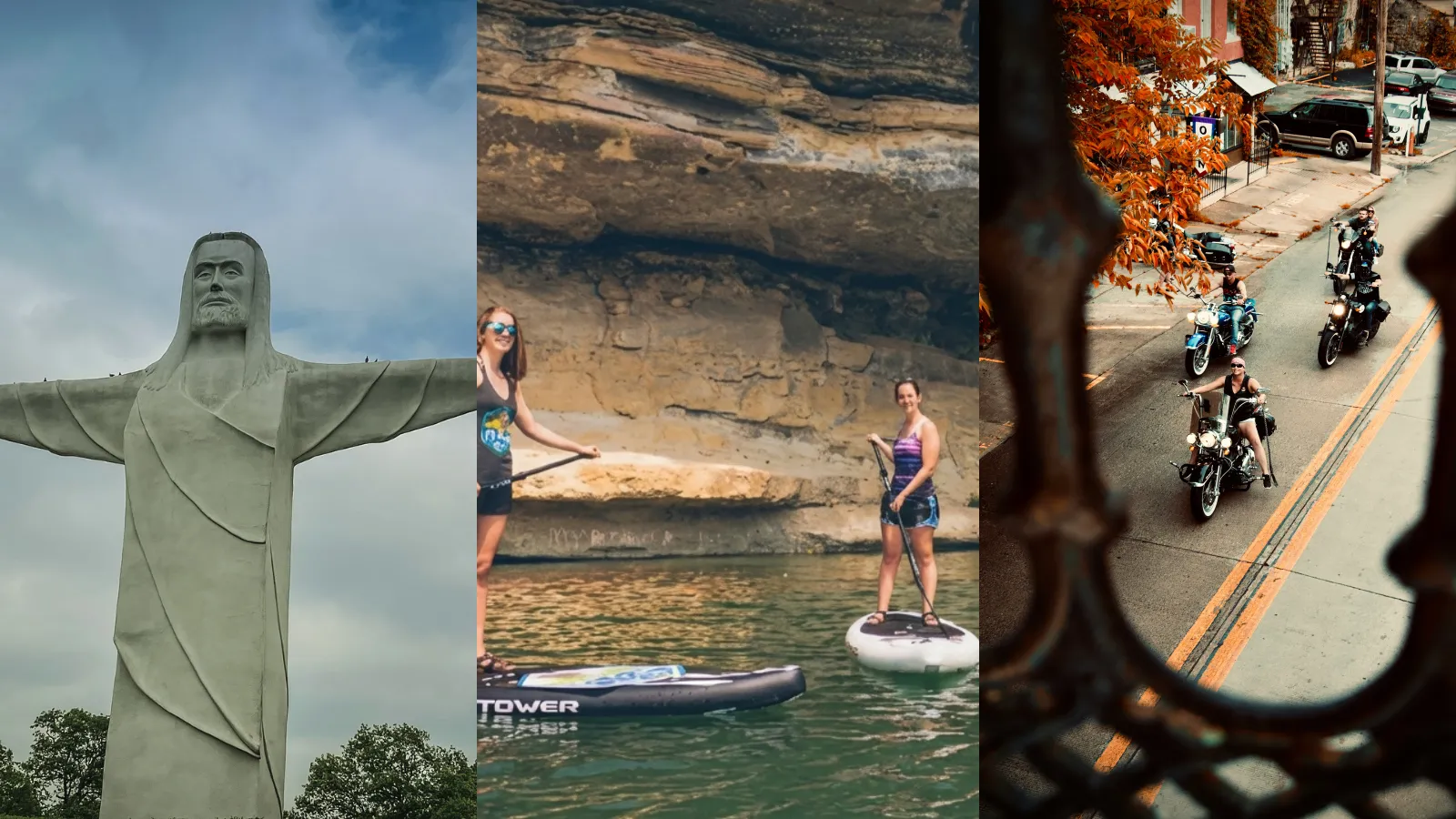
Christ of the Ozarks, downtown boutiques, and autumn on Spring Street
The May Festival of the Arts transforms the town for an entire month, with installations, performances, and exhibitions appearing in unexpected places. The Opera in the Ozarks summer program brings emerging talent to an intimate venue in nearby Inspiration Point. Year-round, galleries offer openings and events that draw collectors from across the region.
Natural Attractions
Beyond the town itself, the surrounding Ozark landscape offers remarkable experiences. Thorncrown Chapel, designed by E. Fay Jones (a student of Frank Lloyd Wright), rises 48 feet in a structure of glass and wood that seems to dissolve into the surrounding forest. It's regularly cited as one of the finest examples of organic architecture in the world.
Lake Leatherwood City Park encompasses over 1,600 acres of Ozark wilderness, with hiking and mountain biking trails, fishing, and swimming. Beaver Lake, one of the clearest lakes in the country, offers boating, fishing, and water sports just minutes away. Underground, Onyx Cave and other caverns reveal the karst geology that creates the region's abundant springs.
Dining & Provisions
The food scene in Eureka Springs punches well above its weight. Farm-to-table restaurants source from the region's growing network of small farms. The Ozark terroir, limestone-filtered water, wild-foraged ingredients, heritage breeds raised on small homesteads, gives local cuisine a distinctive character.
The Saturday morning farmers' market brings together producers from throughout the region. Local coffee roasters, craft breweries, and a growing number of Arkansas wineries add to the culinary landscape. And for provisions, specialty shops stock everything from local honey to handmade chocolates to artisan cheeses.
Seasonal Considerations
Each season brings distinct character to Eureka Springs. Spring arrives with dogwoods and redbuds blooming across the hills, perfect temperatures for hiking, and waterfalls running full from winter rains. Summer brings festivals, outdoor dining, and long evenings on porches and patios.
Fall is perhaps the most popular season, when the Ozark hardwoods create a tapestry of color that rivals New England. The town fills with visitors on scenic drives, and the arts festival calendar reaches its peak. Winter brings calmer streets, holiday lights, and cozy evenings by the fire. The springs run warm enough for winter visits, and the naked trees reveal views hidden during leafier months.
Staying with us? Ask at the front desk for our favorite restaurants, galleries, and day trips into the surrounding countryside.
Updated