

Breathing Techniques That Actually Calm the Nervous System

Your breath is the single most accessible tool for nervous system regulation. Unlike heart rate or digestion, breathing is both automatic and voluntary, a bridge between conscious and unconscious control. This means you can use breath to directly influence your physiological state.
Why Breathing Works
The vagus nerve, the main pathway of the parasympathetic nervous system, passes through the diaphragm. When you breathe slowly and deeply, you physically stimulate this nerve, sending signals to your brain that you are safe. Your body responds by lowering heart rate, reducing blood pressure, and decreasing cortisol production.
The key insight: extended exhales are more calming than deep inhales. When you exhale longer than you inhale, you activate the parasympathetic system more strongly.
Five Techniques That Work
4-7-8 Breathing
Inhale for 4 counts, hold for 7 counts, exhale for 8 counts. The extended exhale activates the parasympathetic nervous system.
Best for: Falling asleep, acute anxiety
Practice: 4 cycles before bed or during stress
Box Breathing
Inhale for 4 counts, hold for 4, exhale for 4, hold for 4. Creates a rhythmic pattern that calms the mind.
Best for: Focus, stress management, grounding
Practice: 5-10 minutes daily
Physiological Sigh
Double inhale through the nose (one full breath, then a second small sip), followed by a long exhale through the mouth.
Best for: Quick calm, real-time stress relief
Practice: 1-3 breaths as needed
Coherent Breathing
Breathe at a rate of 5 breaths per minute, inhale for 6 seconds, exhale for 6 seconds. Optimizes heart rate variability.
Best for: Nervous system regulation, daily practice
Practice: 10-20 minutes daily
Extended Exhale
Any pattern where the exhale is longer than the inhale. Even a simple inhale for 4, exhale for 6 activates rest mode.
Best for: Gentle daily regulation
Practice: Throughout the day
How to Start a Breathing Practice
Begin Simply
Start with just 2-3 minutes of extended exhale breathing. You do not need apps, timers, or special equipment. Simply make your exhale longer than your inhale and breathe through your nose when possible.
Choose Your Moment
The most effective times for breathwork:
- First thing in the morning, before checking your phone
- Before meals (aids digestion)
- During transitions between activities
- Before bed (supports better sleep)
- Any moment you notice stress rising
Build Gradually
Do not force breath lengths that feel uncomfortable. If 4-7-8 breathing feels too long, start with 3-5-6. The goal is relaxation, not achievement. As your capacity builds, longer patterns will feel natural.
Breathing in Nature

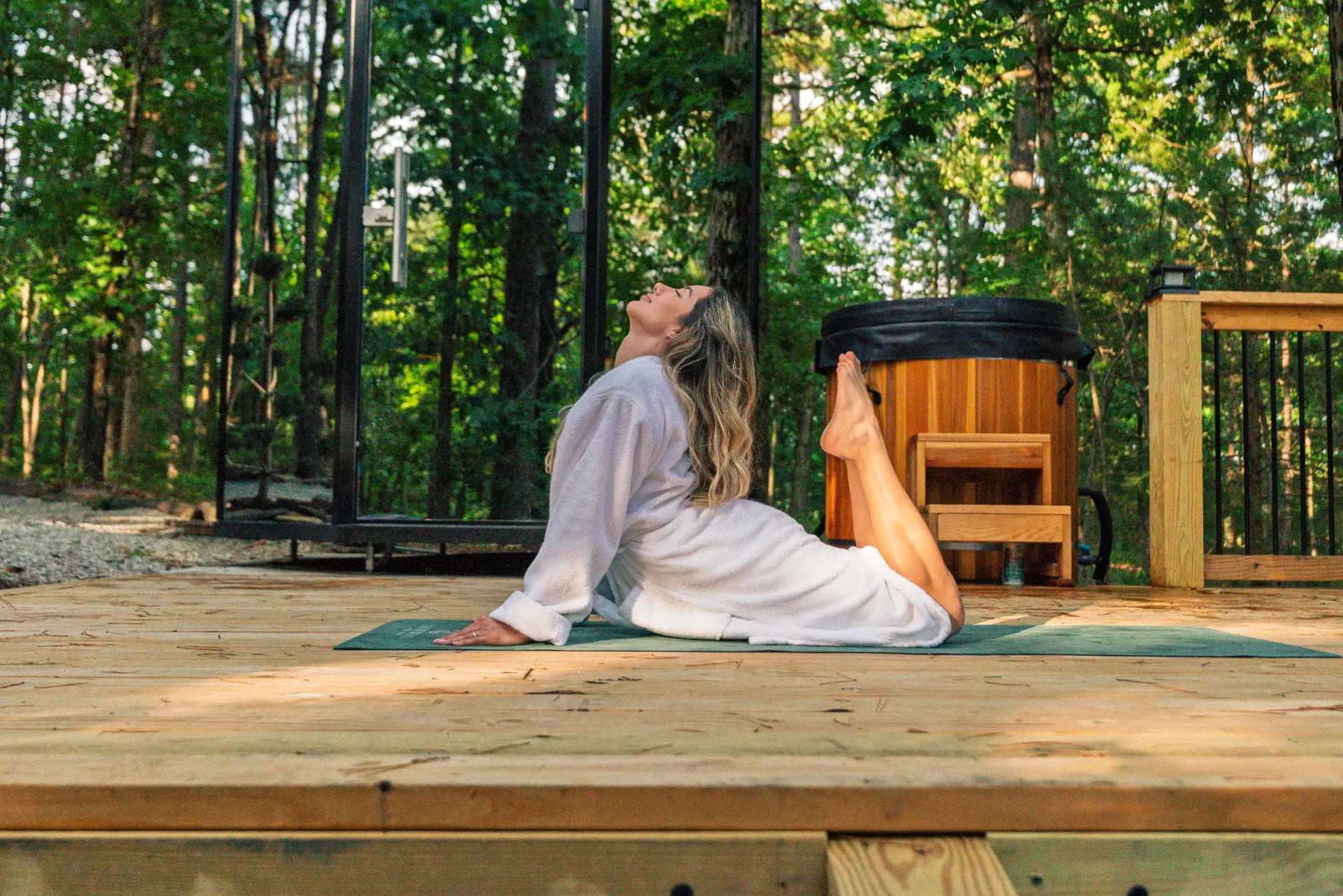
Breathwork becomes even more powerful when practiced in natural settings. Forest air contains beneficial compounds that enhance the calming effects. The absence of distractions allows deeper focus. The beauty of the environment naturally slows the breath.
At Forest Springs, the trails, the sauna, and the quiet corners of the property are good places to practice on your own. Many people find that learning these techniques in a calm setting makes them easier to maintain at home.
Updated